Trimming and pruning that respects the tree — and the oak wilt calendar
Clearance, deadwood, and crown work that keeps Conroe shade trees healthy. No topping. Ever.
Pruning we do — and pruning we refuse
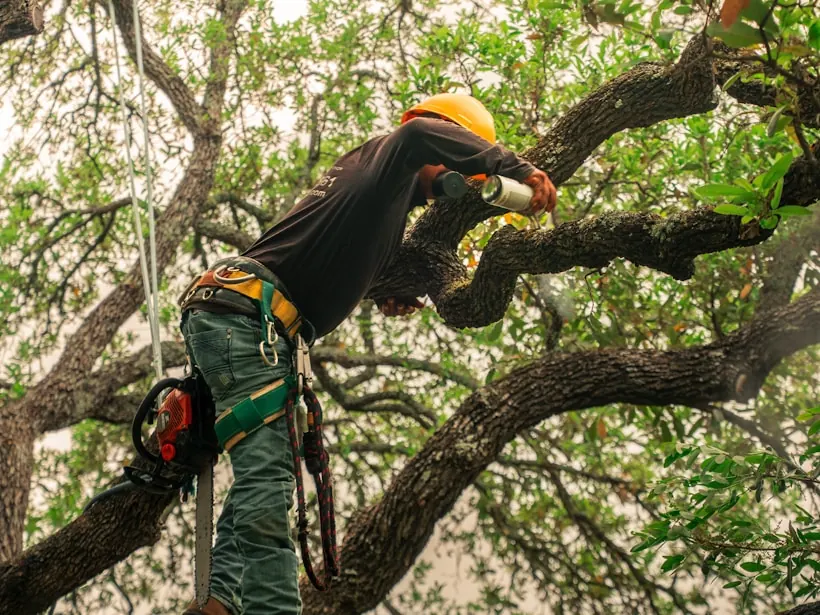
Roofline and driveway clearance is the bread and butter — limbs sanding the shingles every windy night, or hanging low enough to clip the truck. Deadwood removal matters more than most people think: dead limbs in a live crown are what actually lands on cars in a routine thunderstorm. Crown cleaning and thinning lets wind through instead of letting the whole tree act like a sail, and structural pruning on young trees is the cheapest tree work you will ever buy — ten minutes with a pole saw now instead of a cabling job in fifteen years.
What we don’t do is top trees. Topping a water oak doesn’t make it safer; it makes a rotting stub factory that grows back weakly attached water sprouts. If someone quotes you a “topping,” that’s the quote to throw away — the industry association’s consumer site, treesaregood.org, says the same thing in politer language.
The oak rule: February through June, the saw stays off
Oak wilt is active in Texas, it kills live oaks and red oaks, and it spreads through fresh pruning cuts in spring. So on oaks we follow the Texas A&M Forest Service guidance: no routine oak pruning February 1 through June 30, and cut surfaces painted immediately the rest of the year. Pines, sweetgums, elms, pecans — different rules, mostly winter-flexible. The full explanation is on our oak wilt page; the short version is that a July trim is worth the wait when the alternative can kill the tree.
What trimming costs
Most single-tree trims in Conroe run $250–$700 depending on size and how much comes out; a big live oak getting a full crown cleaning can go higher. Multi-tree visits price better per tree — the setup is the expensive part. As always: written estimate first.
Roofline getting scratched at 2am?
Trimming quotes are free, and most jobs are done in a morning.